Bradley Wallis – Regional Manager
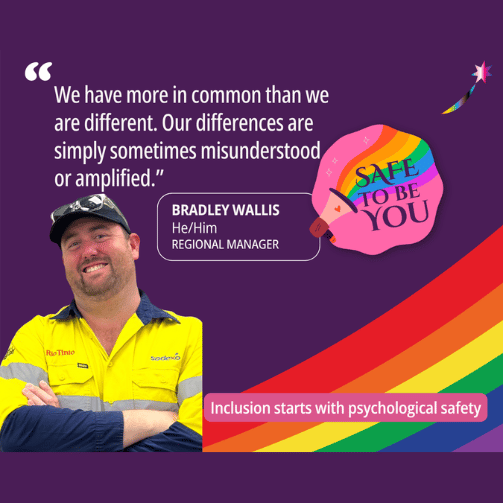
The psychological fear to get over is the ability to come out without a fear or a mask around your coworkers.
Interestingly, Bradley found that safety came not from avoiding difficult conversations, but from engaging in them openly and constructively. “The more I was challenged, the more I realised I was safer,” he says.
Why visibility matters
For Bradley, genuine inclusion comes from curiosity, open conversations, and people being willing to learn from each other. He believes allyship is not something that should stay quiet or hidden in the background.
“Good allyship is visible by sharing support and people knowing your stance before someone has to ask you,” he says.
That visibility matters, especially for people who may still be figuring out whether they feel safe enough to be themselves at work.
Today, Bradley’s goal is supporting greater visibility for LGBTQIA+ colleagues He believes creating psychologically safe workplaces starts with awareness, empathy, and recognising shared humanity.
“We have more in common than we are different,” he says. “Our differences are simply sometimes misunderstood or amplified.”
Looking ahead with hope
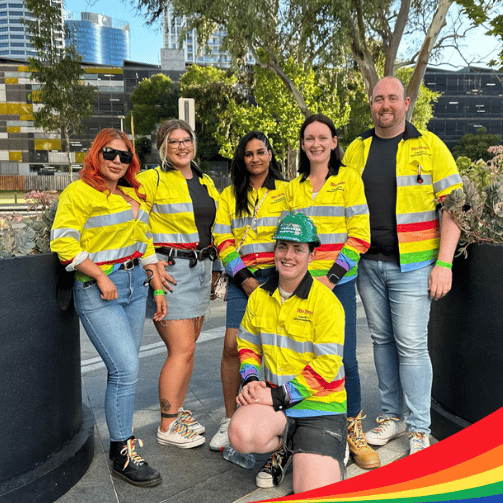
Bradley has seen encouraging signs of progress across Sodexo, particularly through growing participation in employee networks and conversations around inclusion.
“What gives me hope is there are more members in the network wanting to increase visibility of the activities we do,” he says.
For Bradley, psychological safety is not built through policies alone. It is built every day through the way people listen, support each other, and create environments where others feel safe to contribute fully.
Because when people no longer feel the need to hide parts of themselves, workplaces become stronger, more connected, and more human.
And that starts with making it safe to be you.