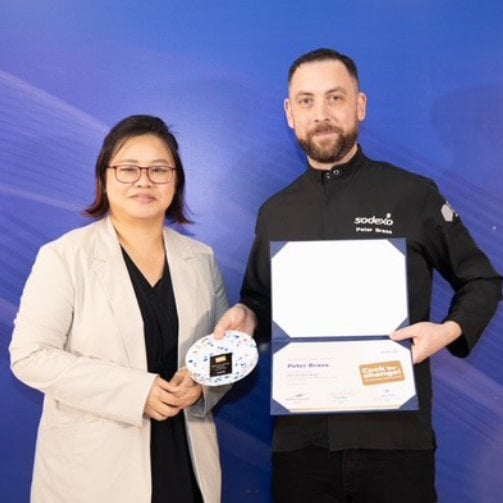
Peter Brass: Rethinking food waste, one ingredient at a time
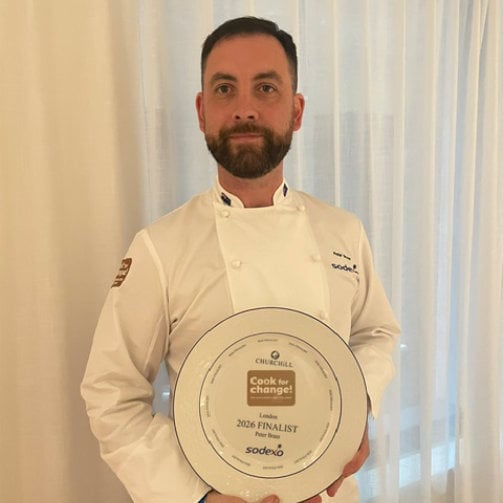
A challenge worth taking
Peter has always been passionate about sustainability and finding ways to reduce food waste. Cook for Change gave him an opportunity to put those values into practice while pushing himself creatively.
“I wanted to show that ingredients we often overlook or throw away can become something special,” he says.
As a Village Manager, Peter's responsibilities extend beyond the kitchen to people, budgets and day-to-day operations. Entering the competition gave him a chance to reconnect with the creative side of his work and see what he could achieve outside his usual routine.
“I wanted to challenge myself. It's easy to become comfortable in your role, and I wanted to see whether I could still compete as a chef.”
His approach reflects a belief that good cooking and sustainability can go hand in hand. Rather than treating food waste as an afterthought, he wanted to make better use of ingredients from the very beginning.
“I expected to learn new techniques and hopefully become a better chef, but I didn't expect it to open so many doors or give me the confidence it did,” he says.
The experience reminded him why he became a chef in the first place. As he puts it, “Cook for Change gave me an opportunity to reconnect with that creative side of myself.”
Finding a use for every part
One of the biggest changes Peter took away from the competition was how he thinks about ingredients.
He was already conscious of food waste. Cook for Change pushed him to go further, designing dishes around using as much of an ingredient as possible rather than deciding what to do with the waste afterwards.
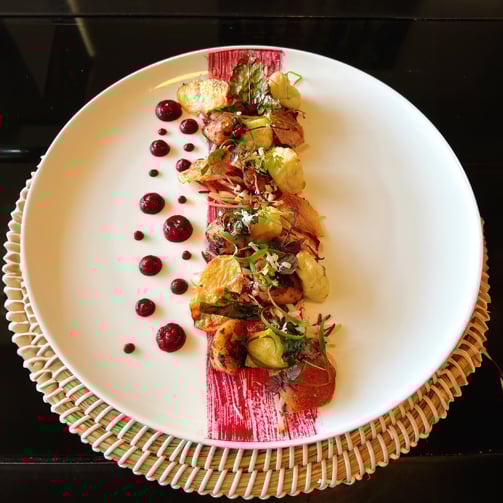
His sweet potato and lentil croquettes were a practical example. The sweet potato peelings became a garnish, while the cauliflower stems, leaves and florets each had a purpose. Parts of the ingredients that might otherwise have been discarded became deliberate components of the dish.
For Peter, the lesson was to look at an ingredient differently from the start. He says, “Rather than starting with a dish and deciding what to do with the waste, I now challenge myself to design dishes around using as much of the ingredient as possible.”
It's a change he has carried into his work with his team. He looks more closely at how ingredients are used, challenges his team to think differently and explores ideas that can work in a real kitchen.
That last point matters. In remote-site catering, sustainability needs to be practical as well as creative. An idea has to work within the realities of preparing food for large numbers of people, using available ingredients and delivering a consistent service.
For Peter, Cook for Change helped connect the creative possibilities of cooking with the everyday decisions that can reduce waste.
Loading component...
You don't need the most expensive ingredients or the most complicated techniques. You need a good idea, a genuine passion for what you're doing and the willingness to challenge yourself.